
HEPOLITE RING TENSION
Piston Ring Tension:
The subject of piston ring tension has come up as a matter of interest in recent months. We stock several brands of piston rings. Fewer now than we once did. But none-the-less there are still two or three choices of ring, depending on bore oversize. As our JCC pistons are not supplied with the rings we leave it up to the customer to decide on the brand. Ring brand is a hotly debated topic which is often influenced by posts on: social media groups, forums, and the opinion of the guy down at the corner coffee shop.
All brands of rings we stock are suitable for our 1930’s tech air cooled motorcycles. While we have occasionally had issues with rings we are confident that all brands offered will perform as designed when installed and bedded-in (broken-in) properly. See our article on ring seating for help in this area. In this article we are to address ring tension. Piston ring radial tension is the inherent force exerted by a ring when compressed into a cylinder, pushing it against the cylinder wall to form a seal
In the modern automotive world there has been a tendency to move toward piston rings with less tension than those on our now classic vehicles. Automotive engineers had the need and idea to decrease internal engine friction. As the friction between cylinder and rings account for a large percentage of the “metal to metal” friction inside an engine it became a point of focus. As weaker and weaker rings were used a number of issues have arisen. While you might get away with a weaker compression ring due to combustion gases adding in sealing the ring, oil rings are another story entirely.
Weak oil control rings and light energy conserving oils have made it possible for vehicles to meet government mandated MPG (mileage per gallon) minimums but at the expense of longevity. All vehicle makes produced from the 1990’s till about 2015 have had some issue or another involving the decision to use weaker piston rings. Weak oil rings and lighter weight oils creates the perfect condition for carbon build up. This is often encountered when a vehicle reaches 150-200k miles. Often just outside the warranty period. Newer vehicles with smart ignition coils are very likely to start seeing misfires at this point. That leaves one looking at a number of snake oil products to solve the problem without tearing down an engine. If you have a vintage British motorcycle an engine tear down is no big deal.
With that said we visit the other end of the spectrum. Rings with stiffer than normal wall pressure. That is what we have encountered with the new production Hepolite rings. The reception on these is about 50/50. Half our customers like them the other half hate them. I know shops with very high levels of skill and experience who are in these two camps. While one argument might be that the added friction results in a slight loss in power. An argument that might have some truth. The higher tension makes these rings bed in easily preventing many of the ring seating problems we have had with other brands. I believe this was the intention of the company who commissioned these rings to be made.
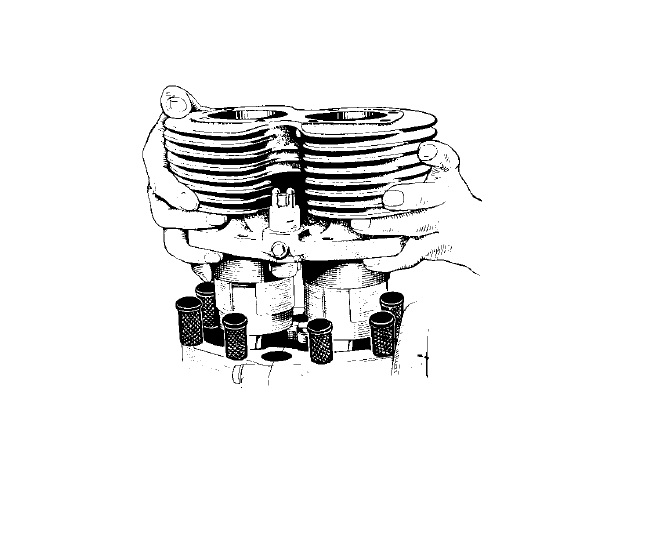
This is all good for an experienced shop, but what about the home restorer? I know of one individual who broke 4 oil rings before finally getting the cylinders on his Triumph 650. Even with ring compressors installation might be rather challenging. Even possibly a two person job. We are sure to advise all dealers ordering these rings that you will need ring compressors with this brand of ring. No using your fingers alone with the new Hepolite rings. They can be hard to install but once in the engine they will give years of trouble free service.