Are resistor caps that important? Well the short answer is yes! Read more to find out why.

We recommend the use of either resistor type spark plugs or 5K Ohm resistor plug caps with all solid state regulators and electronic ignitions. Unless the manufacturer explicitly says not to use them. Use either caps or plugs with resistor elements. Not both or else you can have too much resistance.

Not running some type of spark resistor at the spark plug can cause solid state regulators to charge unreliably. Charge control is achieved by switching on/off of the output voltage at variable frequencies. High frequency interference from the ignition system (either battery coil or electronic) can create an issue where the unit charges below the designed voltage.

In 1931 Champion introduced its first suppressor-type spark plugs, which used a carbon-based resistor to reduce radio interference. Autolite came out with a resistor type plug in 1948. Both were to address the ticking heard on AM car radios of the time. Resistor plugs became standard equipment on cars in the mid 1960’s when FM radio was becoming popular. The higher frequency of the FM Hertz range was more susceptible to electromagnetic interference requiring the resistor spark plug to become factory equipment. Electronic ignition was also introduced on some automobiles during this period.

For years bikes ran without the need of resistor caps or plugs. When more advanced electrics were introduced this began to change. Solid state regulators and CDI ignitions both have “electronic switches” which control the function of the black box. Many of these can suffer from interference causing strange phenomenon.

British bikes started out with a DC generator. Output on these was controlled by a mechanical regulator which consisted of two coils and two sets of contacts. These contacted opened and closed (switched on and off) at an adjustable frequency to regulate voltage and prevent the battery from back-feeding into the generator turning it into a motor. Podtronics and Boyer came out with solid state units DC regulators which replaced these old regulators. (We don’t advise using resistor caps or plugs on bikes equipped with DC generator and traditional points type magneto).

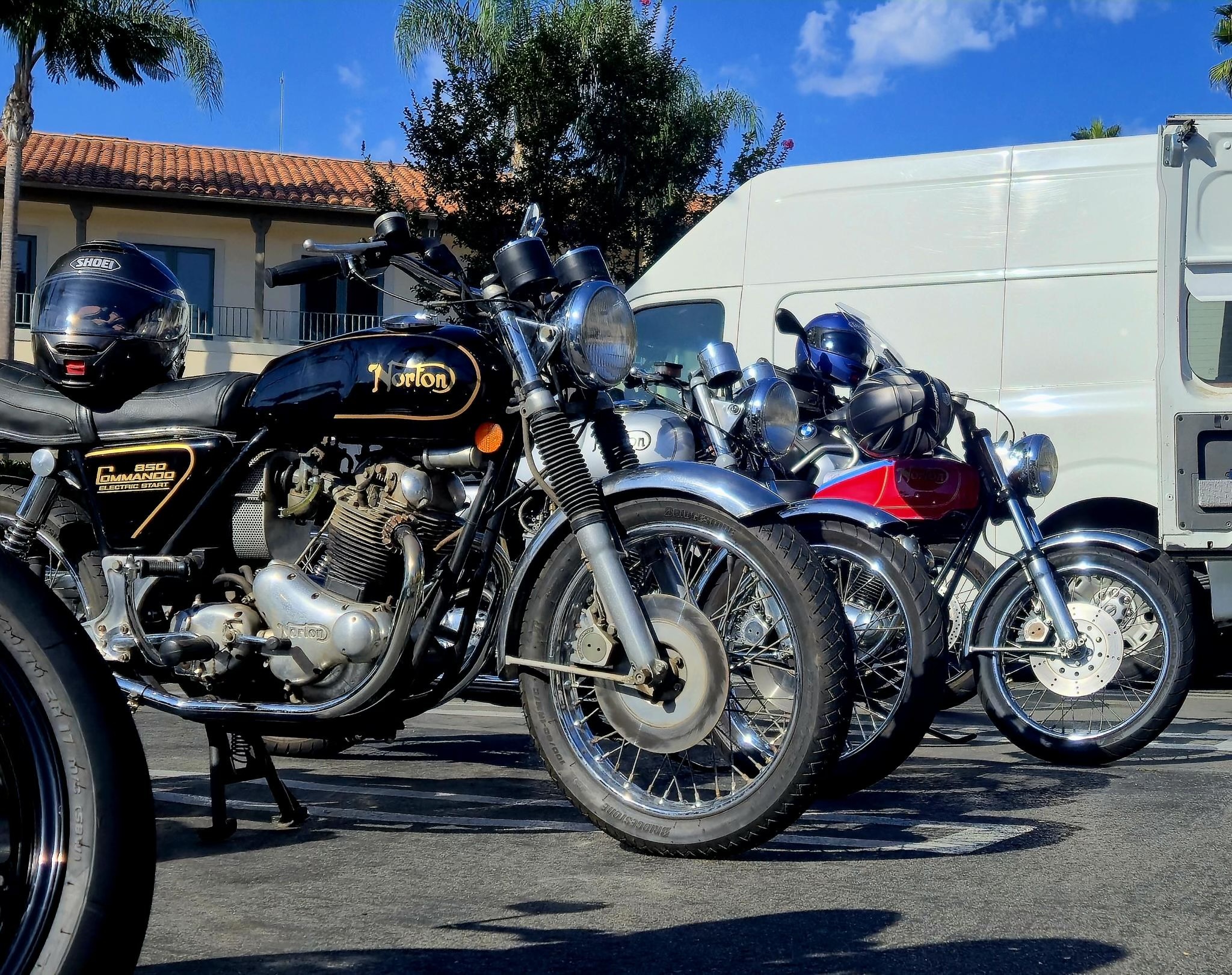
The less complex alternator came on some British bikes in the mid 1950’s. Regulation on these bikes was achieved by means of an elaborate headlamp switch which turned on and off sections of the alternator coil. Though the switch was controlled by the rider and determined by what position the switch was in. In the mid 1960’s the zener diode became standard equipment and automatically controlled the rate of charge by turning excess voltage into heat. Zener diodes require a good heatsink and airflow to function correctly. When Lucas alternator output was upgraded (like on the Norton MK3) it required the use of two diodes in the system. One diode is only rated to 120 watts and the new alternators were capable of 200 watts.

Around this time the solid state regulator by Mity Max was introduced. This eliminated the need for heat dissipating regulating diodes and their bulky heatsinks. The Might Max was a modern solid state regulator rectifier and used the latest technology. That is switching on and off to regulate voltage. Though it did this quite rapidly based off feedback it received from other components inside the black box. I don’t recall if the instructions from Mighty Max ever mentioned resistor caps. But the brands that followed: Boyer, Podtronics, Tympanium, and Sparx all had mention of the caps.

Few users of these electrical products have followed the makers instructions to use of resistor caps in their instructions for decades now. Only when the product failed to perform was the question of the caps importance asked. In the last decade products have advanced and it seems now is the time we should probably be fitting resistor caps with all solid state regulators and ignitions. Especially when both solid state ignition and regulator are used together. The interference from the spark can back feed and upset one or both units causing them to under perform.

I spoke to a customer just this morning about a bike that was charging strangely. The multi-meter at the battery was bouncing all around and the highest voltage was lower than expected. The customer had complained that his bike was not able to finish the local club ride as the system voltage was insufficient to keep the ignition running and battery charged. After fitting resistor spark plugs the charging rate stabilized and voltage went up. So if you are troubleshooting a bike with charging or electronic ignition issues try fitting some resistor plugs or caps first.

Nicholas Willcutt