
Feb 7th 2026
Triumph Tappet Blocks & Pushrod Tubes by Year | JRC Engineering
Triumph Tappet Blocks and Pushrod Tubes — A Neophyte's Complete Guide by Year
The Triumph twin cylinder engine began life in the 1930s as a 500cc and was eventually expanded to 750cc, but the design remained remarkably constant throughout the 44 years the Meriden factory produced them. This similarity in parts has led to much confusion about what works with what in the way of tappet blocks and pushrod tubes and cylinder heads. We will try to clear up some of these questions beginning with the earliest post-war versions and working up to the last models produced in late 1982. This covers the Pre-Unit 500/650 as well as the 1963–83 Unit big twins. The 350/500 is addressed at the end of the article.
Cylinder Head Identification
 |
 |
 |
| 1957–62 — no center head bolt | 1957–62 factory replacement head has cast boss for bolt, undrilled | 1963–72 9-stud with center head bolt (see next example for 71-on locating dowels) |
 |
 |
 |
| Factory replacement head with casting for 10 stud (71-on with locating dowels) | T140 750 head with 10 head bolts | T140 750 head — E model mid-1978 to 1982 |
 |
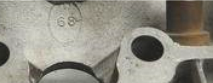 |
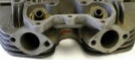
| 1972 650 head with bolt-on inlet manifolds | Date code located in the inlet rocker box cavity. This is a 1966 head. |
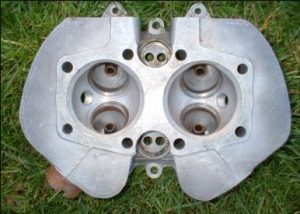
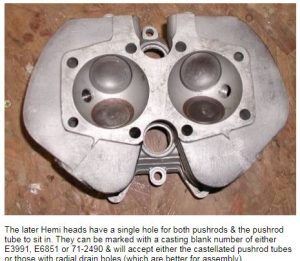
1958–66 500 Squish Band Head
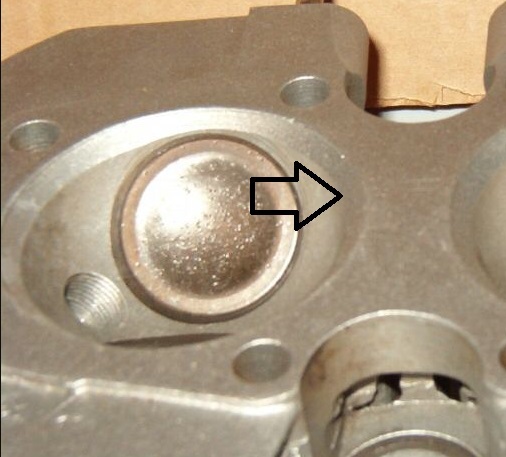
1958–66 500 Squish head used studs to retain manifolds. Had a shallow combustion chamber with a beveled edge near the head gasket surface.
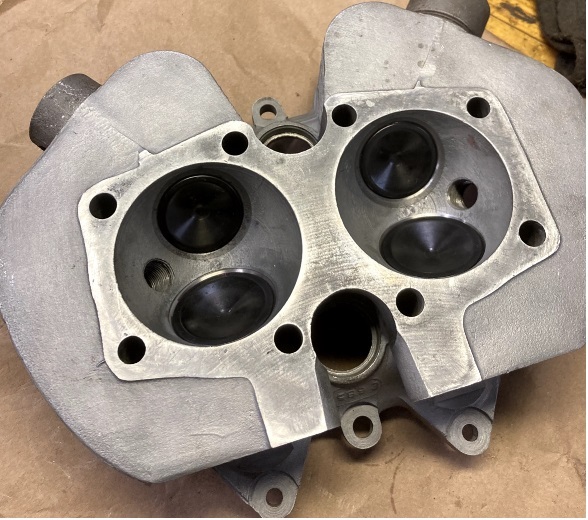
1967–74 500 Daytona Head
1967 and later inlet manifolds retained by 5/16 screws rather than 1/4 studs.
Important — Pushrod Tube O-Ring Crush: The pushrod tube O-rings need only .030" of "crush" — that is, the head should sit about .030" off the gasket surface before torquing the head bolts. Mix components or fit thicker or thinner head gaskets to achieve this. More crush warps the head; less crush causes leaks at the pushrod tube joints.
Triumph Cylinder Head Highlights by Year
- 1956 — First year alloy head. Prone to cracking between the inner stud holes and valve seat. If the crack is small they will still work; valve seats are cast in so they cannot fall out.
- 1959 — Bonneville dual-inlet splayed head. Early ones still had TR6 casting bosses beside the T120 inlets.
- 1963 — Unit construction 9-bolt head introduced.
- 1966 — Valve and inlet port size increased.
- 1969 — Deeper pushrod tube receiver hole in head with a slight chamfer to guide the top O-ring into place.
- 1971 — Changed rocker box gasket. Locating dowels for rocker box. The 1972 T120 head used bolt-on inlet manifolds and push-in port exhaust pipes instead of screw-in spigots.
- 1973 — First T140 head, 10-stud and push-in port exhaust pipes.
- 1978½ — T140E (Environmental) parallel port head for Amal Mk.2 carburetors. D model had threaded exhaust ports for pipe retaining nuts but 650 exhaust spigots will thread in.
- 1982 — T140ES exhaust spigots returned; parallel inlets for dual large carburetors.
1945–62 Pre-Unit and Early Unit Construction Twins (Cast Iron Cylinders, Alloy Head)
The 500 alloy cylinder is not addressed in this section.

- Lifter block has no oil feed to tappets and no O-ring under the 1/8 inch thick flange.
- Pushrod tube has a guide plate internally for the pushrods. This must be aligned so as to not rub on the pushrods in use.
- Lower O-ring is Triumph number 70-1496 — 3/16" thick rubber. Upper O-ring is PN 70-3547 — 3/32" thick.
- The cylinder head will have only 8 larger stud holes with no center head bolt.
- Recess in head for pushrod tube is very shallow — no more than 3/32".
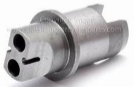

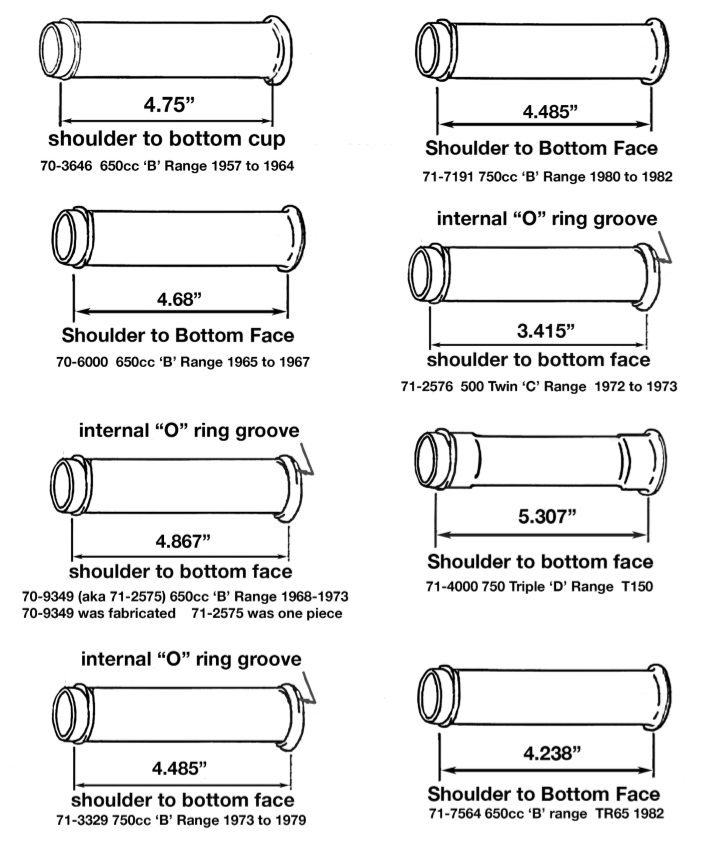
Pushrod tube part number: 70-3646
1963–65 650 Twins
- Lifter block has no oil feed to tappets, no O-ring under the 3/16 inch thick flange.
- Pushrod tube has a guide plate internally for the pushrods. This must be aligned so as to not rub on the pushrods in use.
- Upper O-ring is Triumph PN 70-3547 — 3/32". Lower O-ring is Triumph number 70-1496 — 3/16" thick rubber. Lower O-ring retained by a cupped recess in the pushrod tube.
- The cylinder head will have 8 larger stud holes with a smaller center head bolt. Recess in head for pushrod tube is very shallow — about 1/32".

Pushrod tube part number: 70-6000
1966 650 Twins
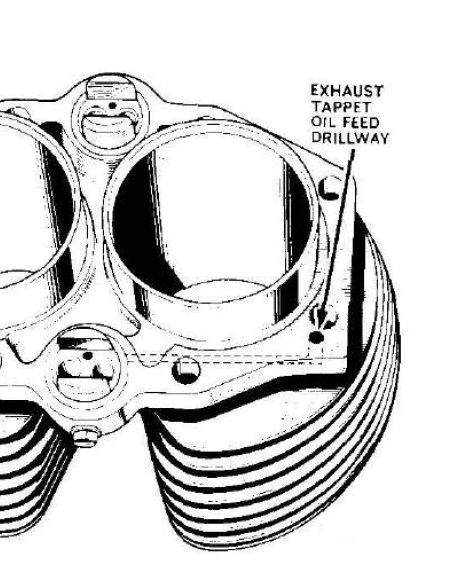
- Lifter block has oil feed to exhaust tappets only and has an O-ring under the 3/16 inch thick flange. Using a non-oil-feed cylinder on an oil-feed case results in big leaks.
- Pushrod tube has a guide plate internally for the pushrods. This must be aligned so as to not rub on the pushrods in use.
- Upper and lower O-ring is Triumph number 70-4752 — 1/8" thick clear rubber. Lower O-ring retained by a cupped washer PN 70-4746.
- The cylinder head will have 8 larger stud holes with a smaller center head bolt. Recess in head for pushrod tube is very shallow — about 1/32".
- 1966 only: The tappet has a long recess for oil feed to the cam. This fits one year only, although the drawings in the parts books show this for later bikes. The 1966 had a restrictor jet in the oil feed to the tappet block. Do not use these tappets in a motor without the restrictor (1967-on), as a dangerous drop in oil feed to the crankshaft will result. Oil hole faces out.

Click here for the factory service bulletin detailing the 1966 restrictor arrangement
1967–68 650 Twins
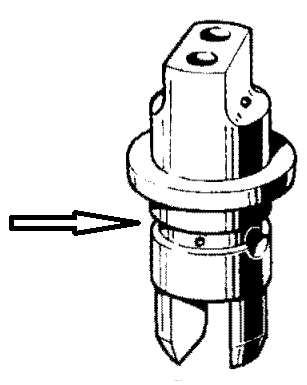
- Lifter block has oil feed to exhaust tappets and has an O-ring under the 3/16 inch thick flange.
- Pushrod tube has a guide plate internally for the pushrods. This must be aligned so as to not rub on the pushrods in use.
- Upper and lower O-ring is Triumph number 70-4752 — 1/8" thick clear rubber. Lower O-ring retained by a cupped washer PN 70-4746.
- The cylinder head will have 8 larger stud holes with a smaller center head bolt. Recess in head for pushrod tube is very shallow — about 1/32".
- The 1967 tappet became the “timed” tappet, using a small recess to align with the oil feed in the tappet block for only a short time in its travel. These are safe to use with any tappet block. Oil hole faces out.
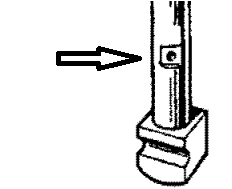
1969–73 650 Twins
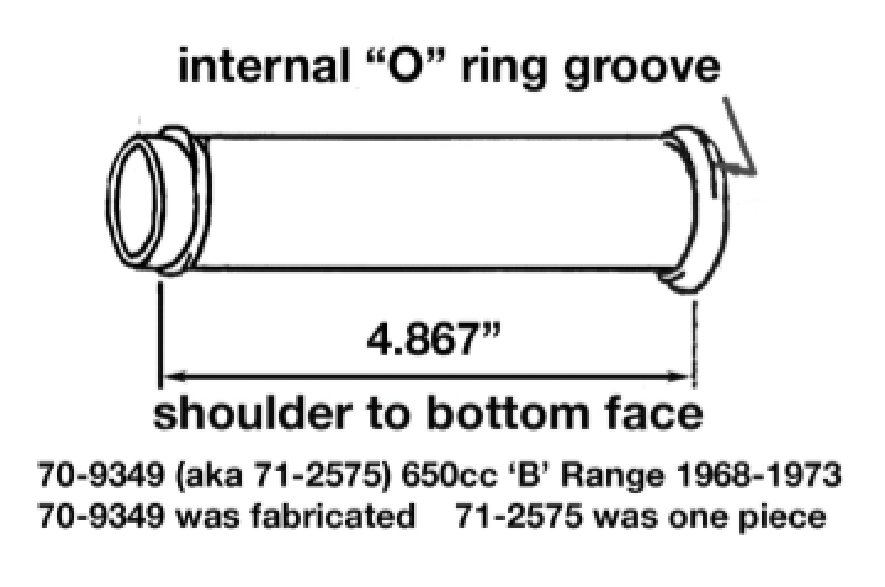
Tappet block part number: 70-9349
- Lifter block has oil feed to exhaust tappets and has an O-ring under the 3/16 inch thick flange.
- Pushrod tube has no guide plate internally for the pushrods. The guide became part of the rocker box gasket.
- Upper O-ring is Triumph number 71-1283 — Viton high-temp. Lower O-ring in a recess in the pushrod tube is PN 70-7310, sealing against the new-style lifter block. Under the pushrod tube is O-ring PN 70-4752, retained by the Triumph “Wedding Band” PN 71-1707.
- The cylinder head will have 8 larger stud holes with a smaller center head bolt. Recess in head for pushrod tube is deeper — about 1/8" or more.
- Timed tappet using a small recess to align with the oil feed in the tappet block for only a short time in its travel. These are safe to use with any tappet block.

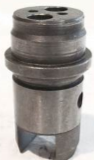
1974–79 750 Twins (T140)
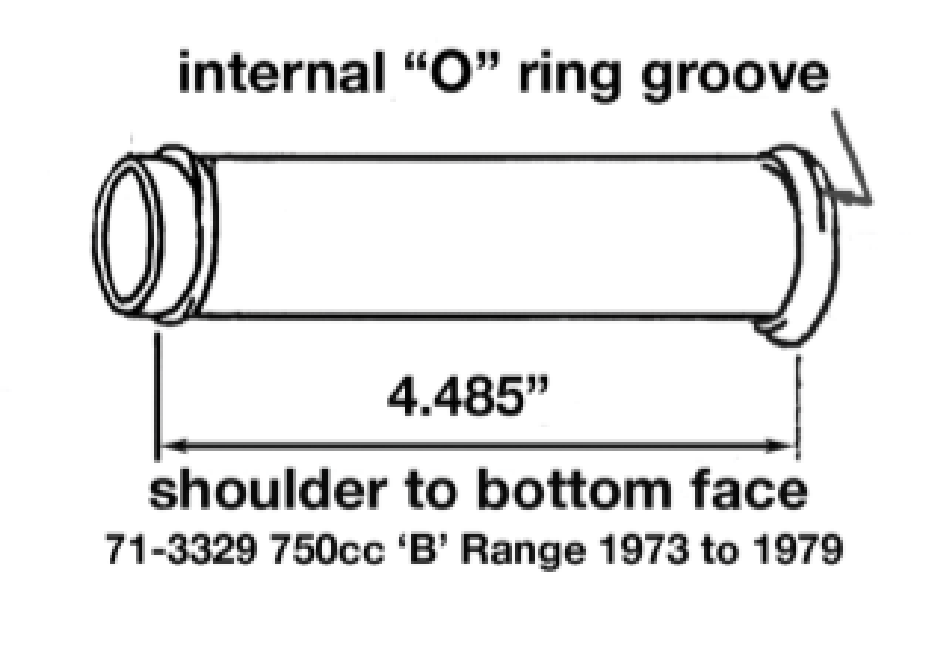
Tappet block part number: 71-3329
- Lifter block has oil feed to exhaust tappets and has an O-ring under the 3/16 inch thick flange.
- Pushrod tube has no guide plate internally. The guide is part of the rocker box gasket.
- Upper O-ring is Triumph number 71-1283 — Viton high-temp. Lower O-ring in a recess in the pushrod tube is PN 70-7310, sealing against the new-style lifter block. Under the pushrod tube is O-ring PN 70-4752, retained by the Triumph “Wedding Band” PN 71-1707.
- The cylinder head will have 8 larger stud holes with 2 smaller center head studs. Recess in head for pushrod tube is deeper — about 1/8" or more.
- Timed tappet using a small recess to align with the oil feed in the tappet block for only a short time in its travel. These are safe to use with any tappet block.
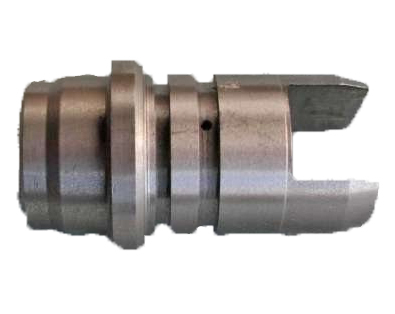
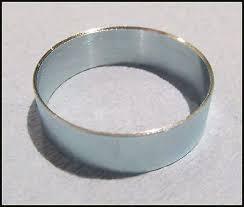
1980–82 750 Twins (T140)
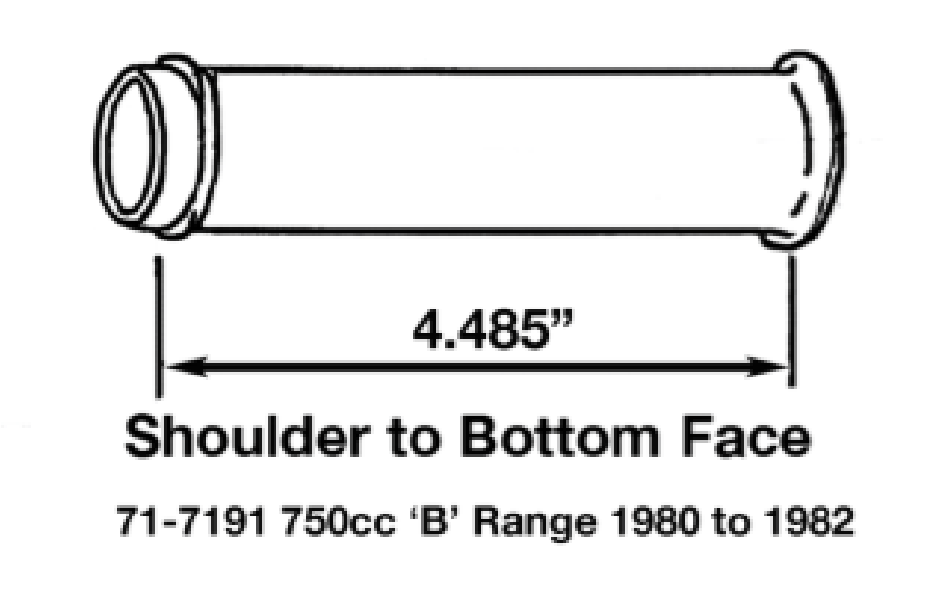
Tappet block part number: 71-7191
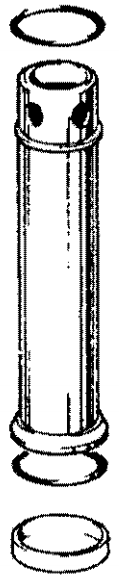
- Lifter block has oil feed to exhaust tappets and has an O-ring under the 3/16 inch thick flange.
- Pushrod guide is part of the rocker box gasket.
- Upper and lower O-ring is Triumph number 71-1283 — Viton high-temp. Lower O-ring in a recess in the pushrod tube is PN 70-7310, sealing against the new-style lifter block and retained by the Triumph “Wedding Band” PN 71-1707.
- The cylinder head will have 8 larger stud holes with 2 smaller center head studs. Recess in head for pushrod tube is deeper — about 1/8" or more.
- Timed tappet using a small recess to align with the oil feed in the tappet block for only a short time in its travel. These are safe to use with any tappet block.
- 1982 cylinder head has threaded exhaust ports for exhaust stubs, like the 650 up to 1971.
To Sum Up: Interchangeability Rules
- You can mix and match 1956–1968 650 lifter blocks with a cylinder head that has the shallow recess for the upper O-ring (1968 and earlier). Beware: 500 1957–68 lifter blocks look the same but have a smaller OD on the flange. Oil feed is on the exhaust side only; however, you can use the exhaust lifter block on the inlet with no problem. Use the correct tube for the lifter block flange thickness — see text above for year applications.
- You can mix 1969–72 lifter blocks and pushrod tubes with any 650 head with the deeper 1/8" recess. Some pushrod tubes have a castellated top while others have holes, but all later-type tubes with captive O-ring in the base will interchange.
- T140 lifter blocks will fit 1969 650 and on. T140 pushrod tubes interchange 1973–78. 750 pushrod tubes are shorter than 650 tubes.
- 8-stud and 9-stud cylinders have different stud spacing — a 9-stud head will not bolt to an 8-stud cylinder. A 9-stud 650 top end complete will bolt to a pre-unit crankcase.
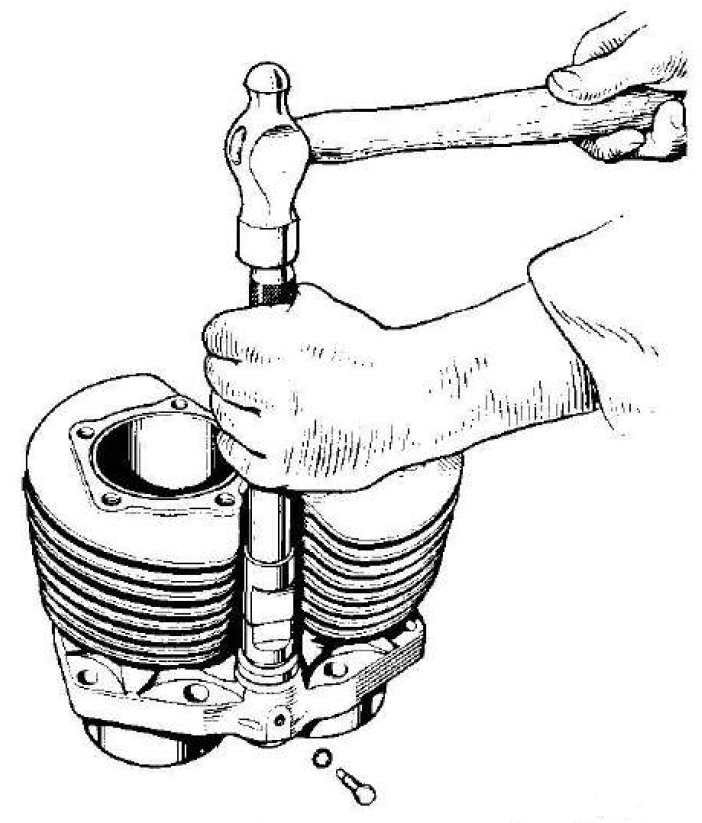
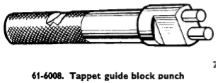
Always use tool PN 61-6008 to remove and replace tappet blocks. Using anything else risks breaking a very costly part.
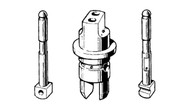
Pushrod Tube Overview
Tappet Block Overview
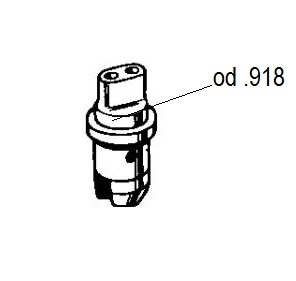
PN 70-1477 — Tappet block inlet/exhaust, 1937–1965
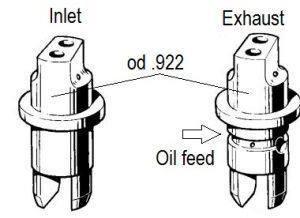
PN 70-4676 — Tappet block inlet, 1966–68
PN 70-5861 — Tappet block exhaust, 1966–68
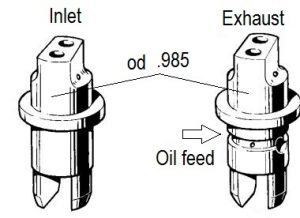
PN 70-9352 — Tappet inlet block, 1969-on
PN 70-9353 — Tappet exhaust block, 1969-on
Triumph 350/500 Unit Twins
The 350 and 500 Triumph models are a bit less complicated. Cylinder heads can easily be swapped between years — all that is required is changing the pushrod tube and seals to match for the proper seal crush. There are only 2 part numbers for tappets, as the smaller-displacement twins never had oiled exhaust tappets. Triumph number 70-3753 is standard radius and 70-4040 is the radius type.
1959–63 350/500 Twins — PN 70-3755
- Lifter block has no oil feed to tappets and no O-ring under the 1/4 inch thick flange.
- Pushrod tube has no guide plate internally. The guide was part of the rocker box gasket.
- Lower O-ring is Triumph number 70-3758 — 3/8" wide thin-wall rubber. Upper O-ring is PN 70-3547 — 3/16" thick.
- Recess in head for pushrod tube is very shallow — about 1/32".
- Tappet block number 70-3736 — inlet and exhaust.
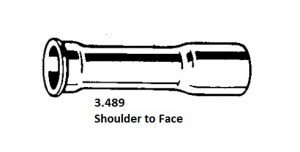
1964–69 350/500 Twins — PN 70-4751
- Lifter block has no oil feed to tappets and no O-ring under the 1/4 inch thick flange.
- Pushrod tube has no guide plate internally. The guide was part of the rocker box gasket.
- Upper and lower O-ring is Triumph number 70-4752 — 1/8" thick rubber.
- Bottom of tube uses part number 70-4746 sheet metal seal cup.
- Tappet block number 70-4676 — inlet and exhaust.
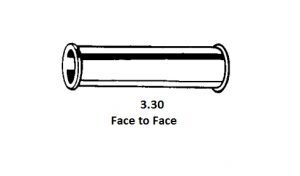
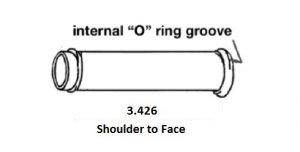
1969–74 500 Twins — PN 70-9512 (71-2576)
- Lifter block has no oil feed to exhaust tappets but does have an O-ring under the 3/16 inch thick flange.
- Pushrod tube has no guide plate internally. The guide was part of the rocker box gasket.
- Upper O-ring is Triumph number 71-1283 — Viton high-temp. Lower O-ring in a recess in the pushrod tube is PN 70-7310, sealing against the new-style lifter block. Under the pushrod tube is O-ring PN 70-3547, retained by the Triumph “Wedding Band” PN 71-1707.
- Recess in head for pushrod tube is deeper — about 1/8" or more.
- Uses tappet block 70-9352 — inlet and exhaust.
Frequently Asked Questions
Can I use T140 750 tappet blocks on a Triumph 650?
Yes — T140 lifter blocks will fit any 650 from 1969 onward. T140 pushrod tubes interchange from 1973–78, but note that 750 pushrod tubes are shorter than 650 tubes, so you cannot swap tubes between displacements.
Are 500 and 650 tappet blocks interchangeable?
They look identical but are not. The 500 tappet block (1957–68) has a smaller outside diameter on the flange. Fitting a 500 block into a 650 cylinder results in leaks. Always verify the part number before installation.
What causes Triumph pushrod tube leaks?
The most common cause is incorrect O-ring crush. The head should sit .030" off the gasket before torquing — more crush warps the head, less crush allows leaks at the tube joints. Mismatched year components (e.g., a 1966 oil-feed block in a non-oil-feed case) also cause major leaks.
What tool do I need to remove a Triumph tappet block?
Use only the official Triumph tappet block drift tool, PN 61-6008. Improvising with other tools risks cracking the cylinder — a very expensive mistake.
What O-rings do I need for a 1969–73 Triumph 650 pushrod tube?
You need three O-rings per tube: 71-1283 (Viton, upper), 70-7310 (lower, captive in tube), and 70-4752 (under tube, retained by Wedding Band 71-1707).
Did Triumph ever fix the pushrod tube oil leak problem?
They tried — designers at Meriden revised the tappet blocks, pushrod tubes, and seal arrangements repeatedly across 40+ years of production. The 1966 introduction of the oil-fed exhaust tappet block, the 1969 move to a deeper head recess and captive O-ring tube, and the switch to Viton seals were all part of this effort. Leaks were reduced but never fully eliminated in production.
Shop Triumph Tappet Blocks, Pushrod Tubes & Tools
JRC Engineering stocks the complete range of Triumph tappet blocks, pushrod tubes, O-rings, and installation tools for every year from 1945 through 1982. All parts are sourced or manufactured to original specifications.
- 70-1477 Tappet Block — Pre-Unit / Early Unit 1937–1965
- 70-9352 Tappet Block Inlet — 1969-on
- 71-3329 Tappet Block — T140 750 1974–79
- 71-7191 Tappet Block — T140 750 1980–82
- 61-6008 Tappet Block Removal/Installation Tool
- Browse all Triumph parts by model
Questions? Contact us. We've been sorting out Triumph parts compatibility for over 40 years.